


News Center
Shandong Zhensure New Materials Technology Industry Co., Ltd.
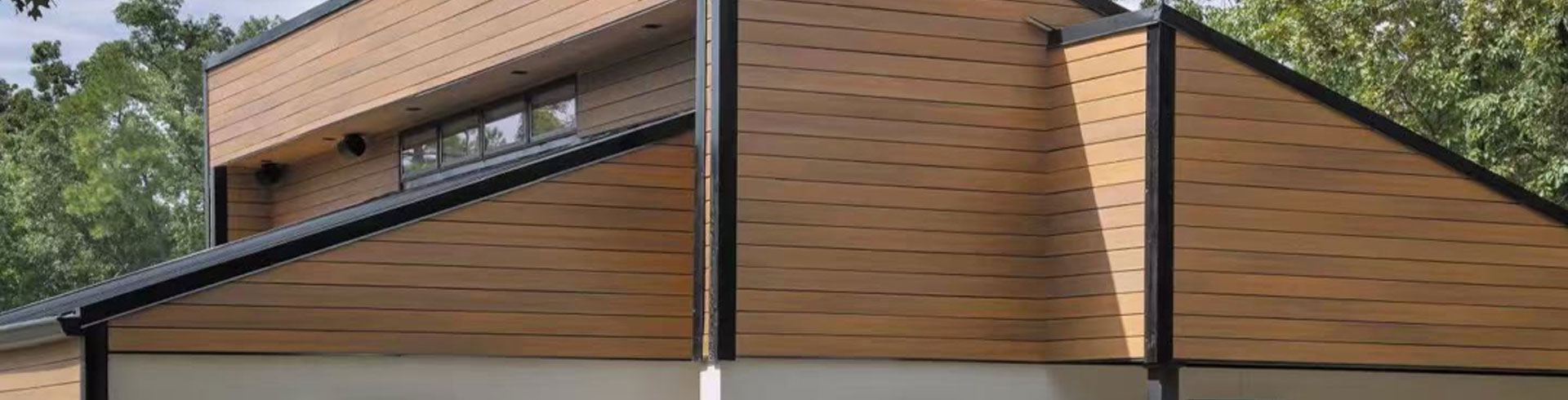

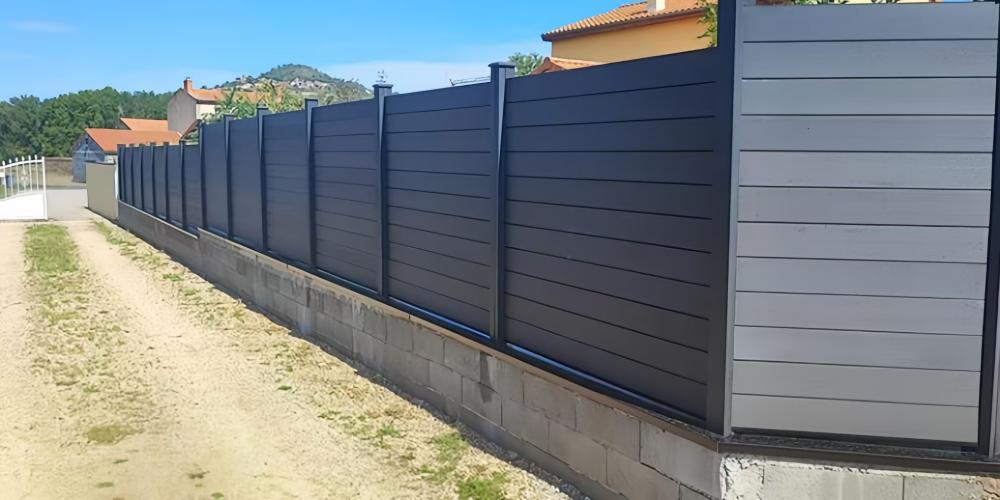
For importers and distributors, finding a product with stability and significant cost advantages is crucial. In the fencing system market, wood-plastic composite fencing stands out as a preferred choice. Distributors of this product can offer decades of reliable service with minimal maintenance costs. At Zhensure, we specialize in manufacturing high-performance composite materials that withstand diverse global climates, providing our partners with products that deliver continuous added value. Our commitment to product longevity is a cornerstone of our supply system, ensuring that every batch of wood-plastic composite fencing meets rigorous durability standards.
Understanding these factors contributing to extended lifespan allows you to confidently promote its advantages to your clients, from contractors to real estate developers, positioning it as a smarter long-term investment than traditional materials.
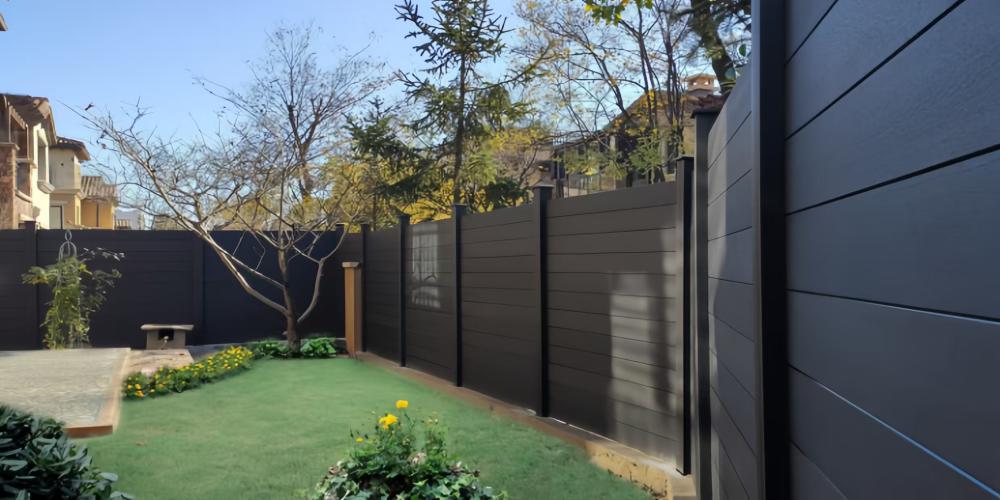
Engineered for Durability: The Core Material Advantage
The exceptional durability of composite fencing stems from its sophisticated material composition. It is fused from recycled wood fibers and high-density polymers. This uniform material effectively resists the main causes of failure in traditional wood fences: moisture absorption, rot, and insect infestation. Unlike wood, it contains no organic matter susceptible to decay; unlike metal, it does not corrode. This fundamental material composition is the first line of defense, ensuring that the structural boards, when properly installed, remain intact and functional for 25 years or more.
Superior Resistance to Environmental Stress
The lifespan of a fence is tested daily by environmental factors. Zhensure's composite fencing is designed to withstand these challenges:
UV and Fade Resistance: Our products utilize advanced UV inhibitors, and many feature a protective co-extruded coating. This significantly reduces color fading, allowing the fence to maintain a consistent and attractive appearance for many years, avoiding the graying or bleaching common in unprotected wood or lower-grade composites.
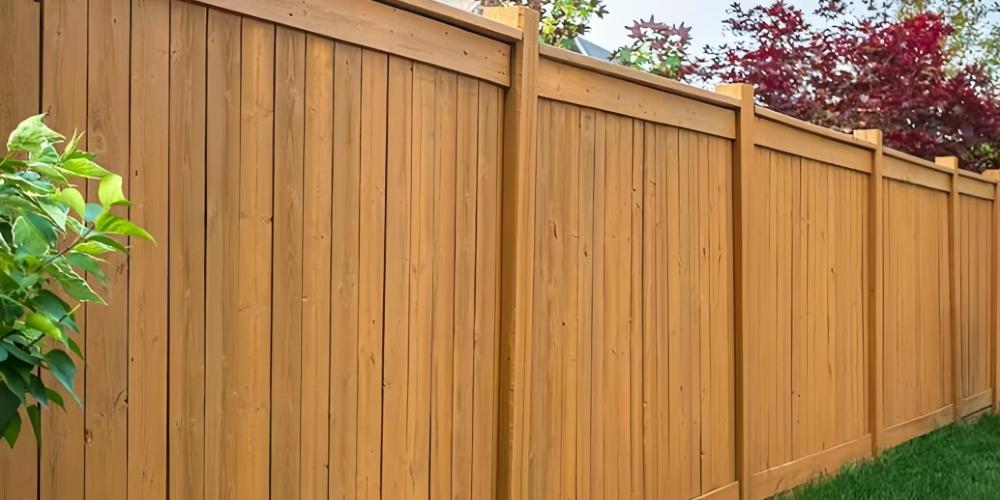
Moisture and Corrosion Resistance: This material has a near-zero water absorption rate, eliminating the expansion, warping, and rotting problems common in wooden fences in humid climates. This is a key advantage for coastal areas or regions with high rainfall, eliminating a major cause of premature failure.
Stain and Scratch Resistance: The non-porous surface and protective coating resist common stains from dirt, mold, or organic debris. It is also more resistant to surface scratches and abrasion compared to softwood, maintaining a smooth surface even after daily contact and cleaning. Structural Integrity and Low Maintenance Advantages:
In addition to surface performance, this product offers significant structural advantages that reduce lifetime costs for the end user:
Dimensional Stability: Unlike wood, which expands and contracts with seasonal changes in humidity and temperature, composite fencing has a very low coefficient of thermal expansion. This stability prevents warping, cracking, and loosening of fasteners over time, which can compromise the fence's structure and appearance.
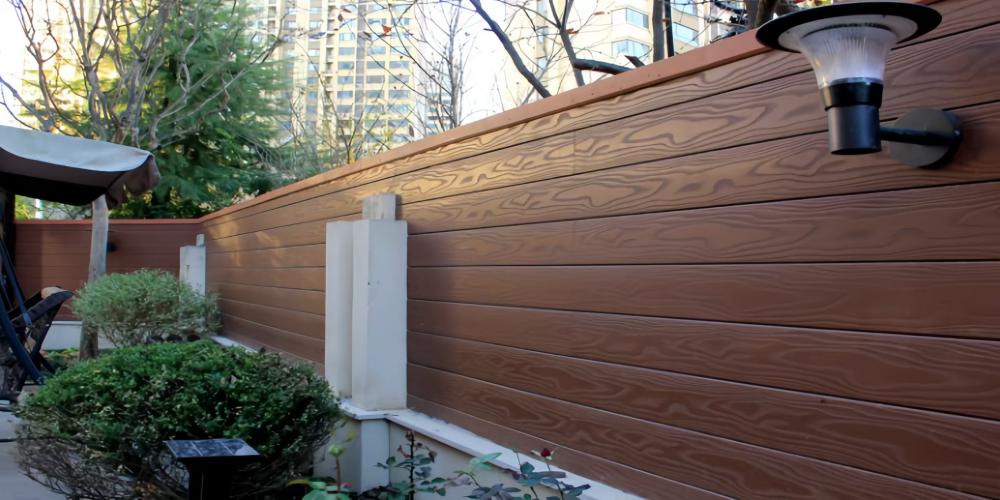
Wind Load Resistance: The combination of material strength and flexible design allows our fencing systems to withstand significant wind loads without cracking or damage, which is crucial for open or elevated installations.
Maintenance-Free: This is a core selling point of the product. No regular staining, sealing, or painting is required. Simple cleaning with soap and water is all that's needed to maintain its appearance. This means significant savings in time, labor, and material costs over the lifespan of the fence, representing a highly attractive value proposition for your customers.
Conclusion: A Strategic Investment in Your Supply Chain
Offering wood-plastic composite fencing is more than just adding a product line; it's providing a solution that minimizes future problems and maximizes customer satisfaction. Its durable nature and virtually maintenance-free characteristics result in a highly attractive total cost of ownership, appealing to both commercial buyers and discerning homeowners. By partnering with Zhensure, you gain access to reliable manufacturing, long-lasting products, and responsive factory support.
As outdoor living spaces evolve, a striking design trend has emerged: dark-toned decking. More homeowners and designers are selecting deep charcoal, rich walnut, and graphite shades to create sophisticated, tranquil retreats. This shift is not merely aesthetic—it reflects a desire for grounding, security, and effortless elegance. At Zhensure, our Wood-plastic composite flooring captures this mood perfectly, offering the beauty of exotic hardwoods without the traditional drawbacks of timber.
For importers and distributors seeking products that deliver lasting value, understanding the engineering behind Wood-plastic composite flooring is essential. At Zhensure, we manufacture composite decking that combines advanced material science with practical design, resulting in a product that outperforms traditional alternatives across every meaningful metric.
For architects and landscape designers working on high-end residential and commercial projects, material selection is a critical decision that balances aesthetic vision with long-term performance. Increasingly, Wood-plastic composite flooring has become the preferred specification for discerning professionals who demand both beauty and durability from their building materials.
For importers and distributors evaluating new product lines, understanding the technical specifications and quality benchmarks of Wood-plastic composite flooring is essential for making informed sourcing decisions.
Transform your garden, rooftop, or poolside into a stunning, low-maintenance oasis with advanced Wood-plastic composite flooring. Engineered for lasting beauty and performance, this innovative material is the ideal foundation for any outdoor living area, offering a perfect balance of style, durability, and effortless care.