


News Center
Shandong Zhensure New Materials Technology Industry Co., Ltd.
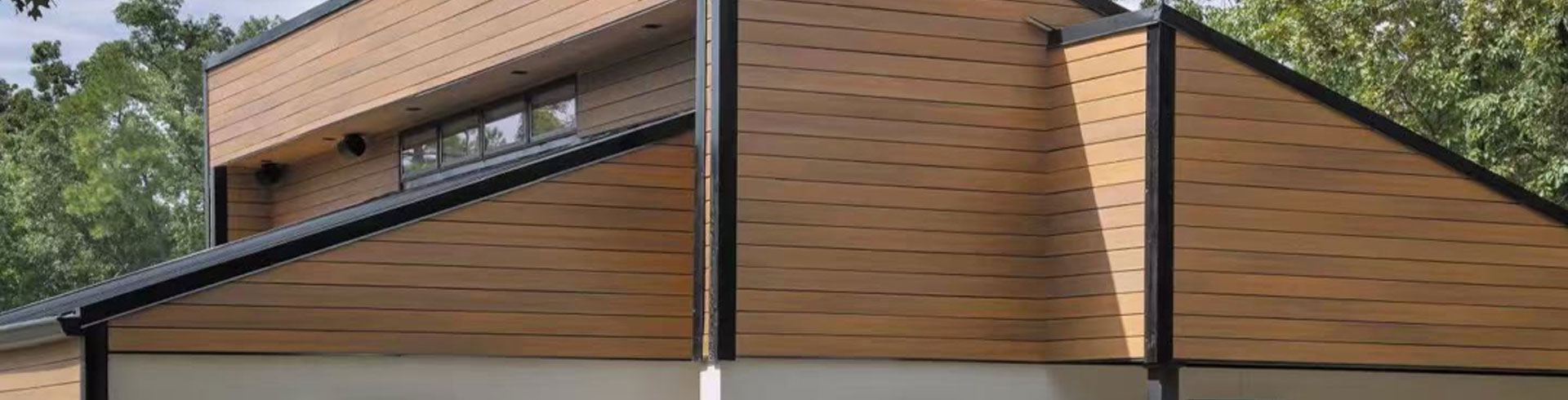

I. Daily Cleaning: Three simple steps for easy maintenance
Remove surface debris
Use a soft-bristled broom or vacuum cleaner to regularly clean up dust, fallen leaves, etc., and avoid scratching with hard objects.
Gentle cleaning to avoid damage
For daily stains (such as footprints, dust), wipe with clean water or a neutral detergent (such as a diluted dishwashing liquid) and a soft cloth.
⚠️ Avoid: strong acid/alkali cleaners, bleach, hard tools such as steel wool balls.
Stubborn stain treatment: Oil stains, ink marks, etc. can be treated locally with a small amount of alcohol or a special wood-plastic cleaner, then rinsed with clean water and dried.Wood-plastic clean.png
Second, deep maintenance: Scientific protection to extend lifespan
Regular inspection and tightening
Check whether the connection points are loose every quarter, and reinforce the screws or clips in time to prevent deformation.
Sun protection and drainage maintenance
Install sunshades or choose light-colored products to reduce the impact of intense sun exposure. Make sure to leave a 5-10mm expansion joint during installation
to prevent water accumulation and expansion.
Anti-mold and anti-bacterial treatment
Damp environments are prone to mold growth. You can wipe with diluted bleach (in a ratio of 1:10) or use a dedicated anti-mold spray.
Iii. Common Problems and Solutions
Scratch repair: For minor scratches, gently sand with fine sandpaper (180-240 mesh) and then apply repair wax. Severe damage requires contact with a professional
service provider to replace the board.
Fading treatment: Choosing products with UV protective coatings can reduce the risk of fading. If it has faded, it can be solved by local painting or replacing the board.
Expansion deformation: Reserve expansion joints during installation to avoid thermal expansion and contraction compression. If it has occurred,
some of the plates need to be removed and the gap readjusted.
Iv. Why Choose Professional Wood-Plastic Cleaning and Maintenance?
Extending lifespan: Scientific maintenance can extend the service life of wood-plastic composites by more than 10 years, saving replacement costs.
Maintain beauty: Regularly clean to prevent stains from penetrating and keep the natural texture and color for a long time.
Environmental upgrade: Reduce the use of chemical cleaners, in line with the environmental protection concept of wood-plastic.
The charm of wood-plastic materials lies in their environmental friendliness and durability, and more importantly,
in the fact that through scientific cleaning and maintenance, every detail can radiate lasting vitality.
Whether it's a courtyard leisure area, a balcony view or a commercial space,
choosing wood-plastic means choosing a lifestyle that requires low maintenance and offers high enjoyment.I. Daily Cleaning: Three simple steps for easy maintenance
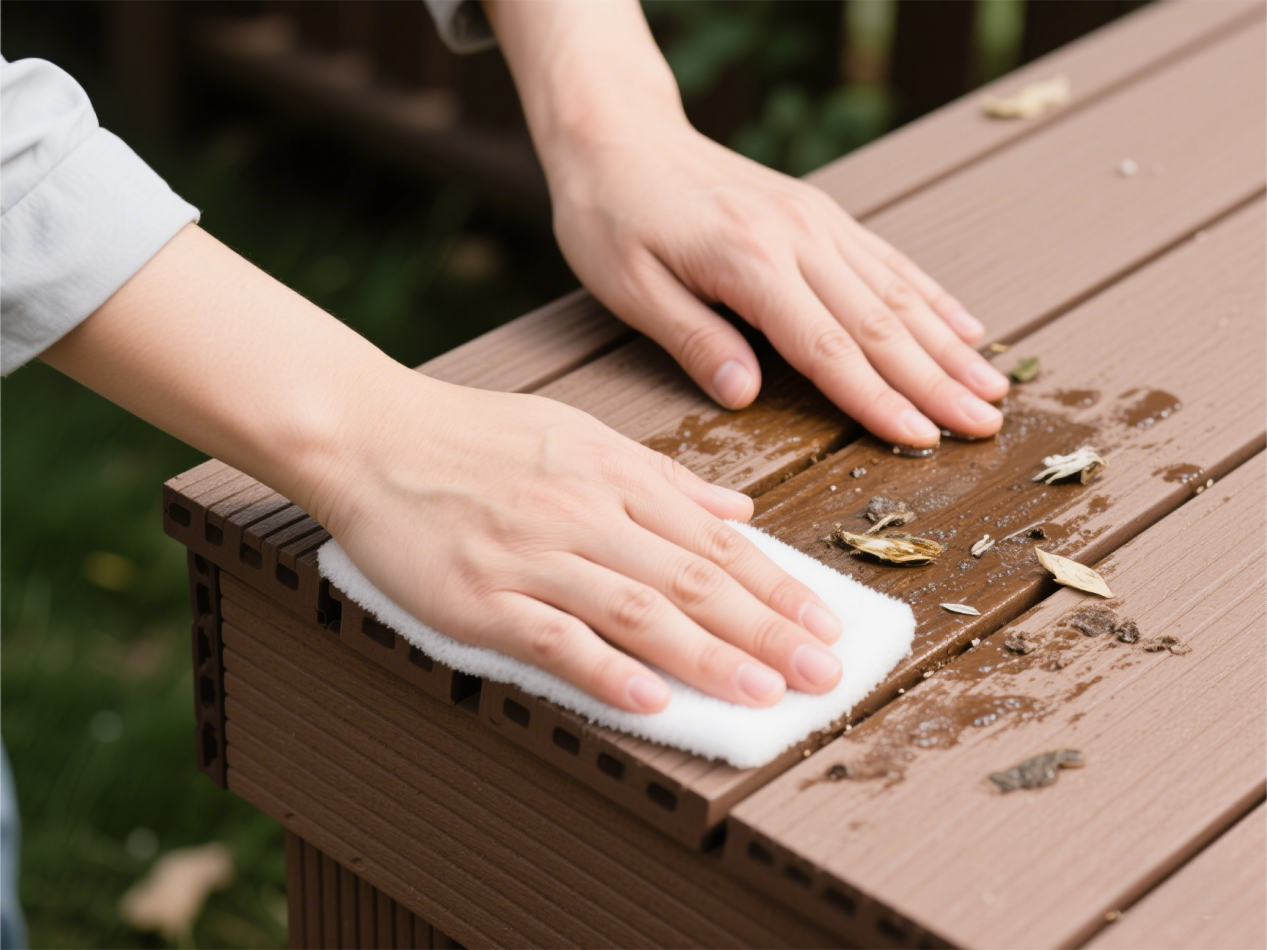
Remove surface debris
Use a soft-bristled broom or vacuum cleaner to regularly clean up dust, fallen leaves, etc., and avoid scratching with hard objects.
Gentle cleaning to avoid damage
For daily stains (such as footprints, dust), wipe with clean water or a neutral detergent (such as a diluted dishwashing liquid) and a soft cloth.
⚠️ Avoid: strong acid/alkali cleaners, bleach, hard tools such as steel wool balls.
Stubborn stain treatment: Oil stains, ink marks, etc. can be treated locally with a small amount of alcohol or a special wood-plastic cleaner, then rinsed with clean water and dried.
Second, deep maintenance: Scientific protection to extend lifespan
Regular inspection and tightening
Check whether the connection points are loose every quarter, and reinforce the screws or clips in time to prevent deformation.
Sun protection and drainage maintenance
Install sunshades or choose light-colored products to reduce the impact of intense sun exposure.
Make sure to leave a 5-10mm expansion joint during installation to prevent water accumulation and expansion.
Anti-mold and anti-bacterial treatment
Damp environments are prone to mold growth. You can wipe with diluted bleach (in a ratio of 1:10) or use a dedicated anti-mold spray.
Iii. Common Problems and Solutions
Scratch repair: For minor scratches, gently sand with fine sandpaper (180-240 mesh) and then apply repair wax.
Severe damage requires contact with a professional service provider to replace the board.
Fading treatment: Choosing products with UV protective coatings can reduce the risk of fading. If it has faded,
it can be solved by local painting or replacing the board.
Expansion deformation: Reserve expansion joints during installation to avoid thermal expansion and contraction compression.
If it has occurred, some of the plates need to be removed and the gap readjusted.
Iv. Why Choose Professional Wood-Plastic Cleaning and Maintenance?
Extending lifespan: Scientific maintenance can extend the service life of wood-plastic composites by more than 10 years, saving replacement costs.
Maintain beauty: Regularly clean to prevent stains from penetrating and keep the natural texture and color for a long time.
Environmental upgrade: Reduce the use of chemical cleaners, in line with the environmental protection concept of wood-plastic.
The charm of wood-plastic materials lies in their environmental friendliness and durability, and more importantly,
in the fact that through scientific cleaning and maintenance, every detail can radiate lasting vitality.
Whether it's a courtyard leisure area, a balcony view or a commercial space,
choosing wood-plastic means choosing a lifestyle that requires low maintenance and offers high enjoyment.
As outdoor living spaces evolve, a striking design trend has emerged: dark-toned decking. More homeowners and designers are selecting deep charcoal, rich walnut, and graphite shades to create sophisticated, tranquil retreats. This shift is not merely aesthetic—it reflects a desire for grounding, security, and effortless elegance. At Zhensure, our Wood-plastic composite flooring captures this mood perfectly, offering the beauty of exotic hardwoods without the traditional drawbacks of timber.
For importers and distributors seeking products that deliver lasting value, understanding the engineering behind Wood-plastic composite flooring is essential. At Zhensure, we manufacture composite decking that combines advanced material science with practical design, resulting in a product that outperforms traditional alternatives across every meaningful metric.
For architects and landscape designers working on high-end residential and commercial projects, material selection is a critical decision that balances aesthetic vision with long-term performance. Increasingly, Wood-plastic composite flooring has become the preferred specification for discerning professionals who demand both beauty and durability from their building materials.
For importers and distributors evaluating new product lines, understanding the technical specifications and quality benchmarks of Wood-plastic composite flooring is essential for making informed sourcing decisions.
Transform your garden, rooftop, or poolside into a stunning, low-maintenance oasis with advanced Wood-plastic composite flooring. Engineered for lasting beauty and performance, this innovative material is the ideal foundation for any outdoor living area, offering a perfect balance of style, durability, and effortless care.